
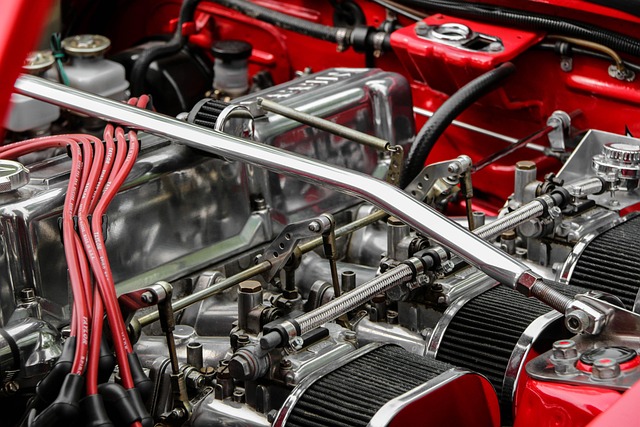
Engine damage, driven by age, misuse, or harsh conditions, affects performance. Common issues include piston wear, carbon buildup, and valve train problems. High-stress race engines face cracks, piston failures. Select Engine Rebuilds offers tailored services for diverse vehicle types, focusing on standard tuning and race car restoration. Choosing optimal parts and techniques is crucial for top performance, efficiency, and emissions compliance. Rigorous post-repair testing ensures enhanced power, fuel efficiency, and longevity.
In the world of automotive excellence, a well-maintained engine is the heart of any vehicle’s performance. As such, professional engine repairs are paramount to ensuring top-tier performance and longevity. The modern engine is a complex symphony of components, and even the slightest misalignment can lead to significant issues. This article delves into the critical aspect of select engine rebuilds—a game-changer for those seeking optimal vehicle health. By exploring proven strategies and leveraging advanced techniques, experts can navigate these intricate mechanisms, fostering both efficiency and power.
- Understanding Engine Damage: Common Issues & Causes
- Select Engine Rebuilds: Choosing the Right Parts & Techniques
- Step-by-Step Guide: Professional Engine Assembly & Tuning
- Maximizing Performance: Post-Repair Testing & Optimization Strategies
Understanding Engine Damage: Common Issues & Causes
Engine damage is a common issue among vehicles, often resulting from various factors such as age, misuse, or harsh operating conditions. Understanding these common issues and their causes is essential for selecting the right engine rebuild or restoration techniques. One of the most prevalent problems is wear and tear on critical components like pistons, valves, and bearings, which can lead to reduced performance and efficiency. For instance, carbon buildup and valve train issues are frequent culprits in engines that have not undergone regular tuning and maintenance.
Race car engines, known for their high-performance capabilities, require specialized restoration techniques due to the extreme demands placed on them during racing events. These engines often experience heightened stress levels, leading to problems like cylinder head cracks or piston failures. Restoring these machines involves intricate processes, including precision engine rebuilding and implementing advanced tuning strategies to achieve maximum output without compromising reliability. A study by the International Automobile Federation (FIA) revealed that nearly 70% of high-performance engines require significant rebuilds or major components replacements after every racing season.
When facing engine damage, choosing the appropriate rebuild option is crucial. Select Engine Rebuilds offers a range of services catering to various vehicle makes and models, ensuring optimal performance and longevity. Their expertise extends to both standard engine tuning for everyday driving and specialized restoration techniques tailored to race cars. By combining advanced diagnostics with tailored solutions, they help owners restore their engines’ original power and efficiency, ensuring the vehicles meet modern performance standards while preserving their heritage.
Select Engine Rebuilds: Choosing the Right Parts & Techniques
When it comes to achieving top performance from an engine, selecting the right parts and techniques for a rebuild is paramount. It’s not merely about replacing worn components; it involves a meticulous process of evaluating, diagnosing, and choosing components that synergize for optimal efficiency. This is where expertise in complex builds comes into play, enabling professionals to navigate the intricate landscape of engine diagnostics and repairs.
Engine noise reduction is a key consideration in modern rebuilding practices. High-performance parts often come with heightened sound profiles, requiring careful selection to meet both performance goals and noise regulations. For instance, upgrading from stock pistons to high-flow models can significantly enhance power but may also increase noise levels unless balanced by other modifications. Efficient engine modifications, therefore, involve a holistic approach, where every component choice contributes to a harmonious, yet powerful, result.
Professionals leverage advanced diagnostic tools and methods to ensure each rebuild meets stringent standards. This includes rigorous testing for compression, flow rates, and emissions compliance. For example, modern engine control units (ECUs) can provide granular data on fuel injection patterns, allowing experts to fine-tune the system for peak efficiency. Moreover, understanding the interplay between various components—cams, valves, and timing—is crucial for achieving both powerful outputs and smooth operation. Through this meticulous process, we transform engines from mere functional units into symphony of performance, where every part contributes its unique note to the overall tapestry of speed and responsiveness.
Step-by-Step Guide: Professional Engine Assembly & Tuning

Professional engine repairs are essential for achieving top performance in any vehicle. When it comes to assembly and tuning, a step-by-step guide is crucial for ensuring precision and efficiency. The process begins with selecting the right engine rebuilds, which can be tailored to specific needs through reputable remanufaturing companies. These specialists offer advanced solutions that blend state-of-the-art technology with traditional craftsmanship, resulting in reliable and powerful engines.
The first step in assembly is disassembling the old engine, meticulously documenting each component for easier reconstruction. Next, specialized tools and techniques are employed to refine internal parts, such as cylinder walls, pistons, and valves. This meticulous process involves precise measurements and surface treatments to reduce friction and optimize performance. For instance, honing cylinder walls to a specific finish can significantly improve compression ratios, leading to increased efficiency and power output.
Tuning is the art of fine-tuning the engine’s performance characteristics. This includes calibrating the fuel injection system for optimal combustion, adjusting spark plug timings to synchronize ignition, and refining the intake and exhaust systems for maximum airflow. Modern diagnostic tools facilitate these adjustments by providing real-time data on engine parameters, allowing experts to make precise modifications. For example, efficient engine modifications like high-flow catalytic converters or optimized air filters can reduce noise levels while enhancing overall performance.
Expert engine reconditioning, performed by seasoned professionals, ensures that every rebuilt engine meets the highest standards. This involves rigorous testing and fine-tuning, guaranteeing not only peak performance but also longevity. Companies specializing in engine remanufaturing have honed their processes through years of experience, enabling them to offer warranties and after-sales support. By choosing these experts for your engine repairs, you gain access to a wealth of knowledge and cutting-edge technology, ensuring your vehicle runs at its best, safely and efficiently.
Maximizing Performance: Post-Repair Testing & Optimization Strategies

After a successful engine rebuild, maximizing performance through rigorous post-repair testing and optimization strategies is paramount. These steps are crucial to ensuring the engine operates at its peak efficiency, delivering both enhanced power and fuel economy. One of the primary indicators of optimal performance is the absence of engine misfires, which can significantly reduce output and efficiency. Local engine rebuilding services that employ modern diagnostic tools are adept at identifying and correcting these misfires through advanced scanning techniques, allowing for precise tuning adjustments.
For instance, consider a case where an engine, following a catastrophic failure or accident, was thoroughly rebuilt by a reputable shop. Post-repair tests revealed a slight misfire in one of the cylinders. Through meticulous calibration and adjustment, the service team corrected this issue, resulting in a seamless transition to top performance. This real-world example underscores the importance of thorough testing in achieving not just functional repair but also peak engine performance.
In addition to diagnostic scanning, select engine rebuilds often incorporate dynamic optimization techniques. These strategies involve running the engine through a series of stress tests and fine-tuning its parameters to optimize combustion efficiency. By subjecting the engine to simulated real-world conditions, rebuilding specialists can identify and address any bottlenecks or inefficiencies that may have been overlooked during the initial repair process. This data-driven approach ensures that the rebuilt engine performs not just as well as new but potentially better than it did prior to its accident or failure.
Ultimately, successful post-repair testing and optimization involve a symbiotic relationship between advanced technology and expert craftsmanship. Local engine rebuilding services that prioritize these strategies ensure not only reliable engine performance but also deliver on the promise of enhanced power, fuel efficiency, and longevity—all critical factors for any vehicle seeking to excel both on and off the road.
By meticulously understanding engine damage, identifying common issues, and addressing their root causes, professionals can ensure successful Select Engine Rebuilds. Each step, from part selection to assembly and tuning, requires precision and expertise. Maximizing post-repair performance through testing and optimization strategies solidifies the importance of a comprehensive approach. This authoritative article offers valuable insights that empower readers to achieve top engine performance, underscoring the critical balance between understanding damage, choosing the right components, and implementing effective rebuilding techniques.